How Permeable Surfaces Reduce Runoff and Improve Urban Resilience
Invalid date
How Permeable Surfaces Reduce Runoff and Improve Urban Resilience
The ground beneath a city is the most under-used water management asset in urban planning. Sustainable Drainage Systems (SuDS) are built on a simple premise: if the surface can absorb water, the drain does not have to handle it. When paired with subsurface storage systems like Stone Hands' Eco Bloc modular units, permeable surface design becomes one of the most effective urban flood mitigation tools available — proven, scalable, and suited to Indian monsoon conditions.
The Problem — Impermeable Cities and the Runoff Crisis
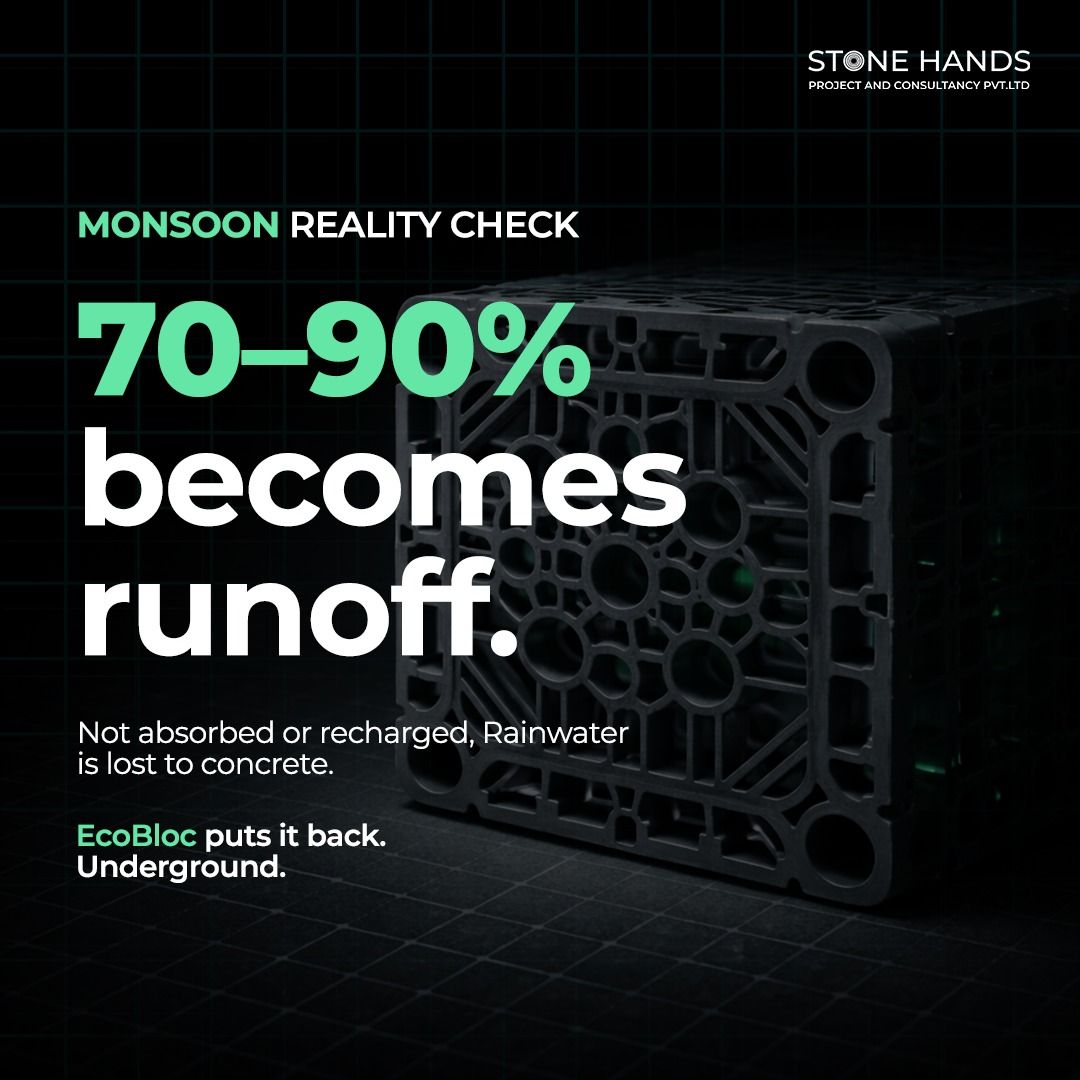
In natural ground, typically only 10–20% of rainfall becomes surface runoff. In dense Indian urban environments, studies show 70–90% of rainfall from a heavy shower becomes immediate surface runoff. Consequences:
• Storm drains receive 5–8× more water than designed for
• Flash flooding within 20–40 minutes of peak rainfall
• Groundwater recharge almost entirely cut off
• Roads and structures damaged by subsurface water pressure
The Concept — What SuDS Are
SuDS is the UK framework for nature-informed stormwater management. A SuDS treatment train: (1) Source control — absorb where rain falls, (2) Site control — manage across development, (3) Regional control — manage at catchment scale.
Common SuDS components:
• Permeable pavements — porous asphalt, permeable concrete, modular permeable paving
• Bioretention cells — planted areas absorbing and filtering runoff
• Swales — shallow vegetated channels slowing and filtering runoff
• Underground modular storage — Eco Bloc systems beneath hard surfaces
• Infiltration trenches — gravel-filled trenches for runoff percolation
Applications
Car parks and driveways | Road medians and pavements | Parks and sports grounds | Building forecourts and plazas
The Technology — Eco Bloc and Subsurface Storage
How it works:
1. Surface runoff enters through inlet grates or permeable pavement base
2. Water fills void space within interlocked Eco Bloc units (95% void ratio)
3. During rainfall: system absorbs peak surge, preventing drain overflow
4. After rainfall: water slowly percolates through base geotextile, recharging groundwater
5. Excess safely overflows to drain at controlled, reduced flow rate
Technical specs:
• Material:Recycled polypropylene — chemically resistant, no corrosion
• Load rating: 60 tons — viable under roads, parking, heavy traffic
• Void ratio: ~95%
• Lifespan: 50+ years with standard maintenance
Benefits
• Peak runoff reduction: 40–70% in properly sized systems
• Groundwater recharge: stored water percolates into aquifer
• Regulatory compliance: RERA, Smart City, and municipal approval conditions
• Long-term cost savings: fewer drain blockages, reduced road damage
• Environmental credentials: supports green building ratings and ESG reporting
FAQs
What is the difference between permeable paving and a SuDS system?
A: Permeable paving is one component — it allows water through the surface. A complete SuDS system also includes subsurface storage, filtration layers, overflow management, and groundwater recharge pathways.
How much runoff can a SuDS system handle?
A: Properly designed systems handle runoff from a 1-in-30-year design storm. Stone Hands sizes each system on site catchment area, surface type, and local rainfall data.
Can Eco Bloc be installed under existing roads without full demolition?
A: Installation requires excavation to required depth — standard in road relaying and infrastructure construction.
Is SuDS suitable for Indian monsoon rainfall intensity?
A: Yes. SuDS systems are specifically designed for high-intensity, short-duration rainfall — exactly the pattern of Indian monsoon storms.
What maintenance does a SuDS system require?
A: Inlet inspection and cleaning periodically. Underground Eco Bloc requires occasional inspection via maintenance chambers.
How does this help groundwater levels?
A: By storing rainwater underground and allowing it to percolate into soil over 24–72 hours post-storm, Eco Bloc actively recharges the aquifer.
CTA: Planning a development with significant hard-surfaced area? Talk to Stone Hands about a SuDS solution for your site.
→ https://stonehands.in/solutions
Contact Us
Join us to
Shape a Water secure future
We'd love to hear from you. Fill out the form and our team will get back to you within 24–48 hours.
Prefer a Direct Approach?
+91 82200 02200
Contact@stonehands.in